What the heck is an SVDA anyways?

SVDA stands for Single Vacuum - Dual Advance but what exactly is that and why does that matter when shopping for a new distributor? This is one of those "easy" upgrades for an aircooled VW that provides the most bang for your buck. We won't get too technical here, but we will cover the basics in order to explain why two advances are better than one.

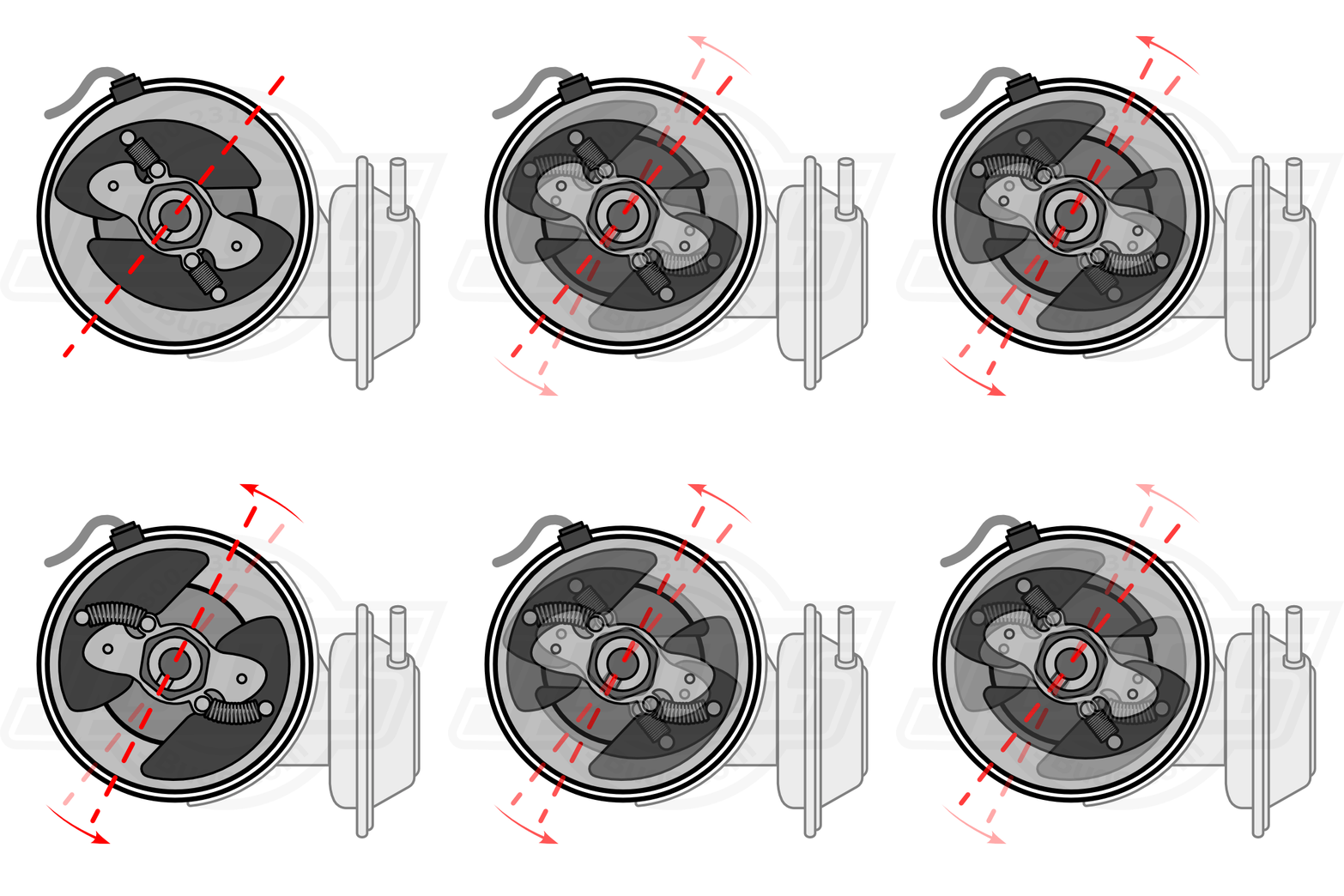
Mechanical (Centrifugal) Advance

Distributor Centrifugal Advance
Based on engine RPM
The standard for distributors. As the distributor shaft rotation speed increases, a series of weights and springs swing out to advances the timing.

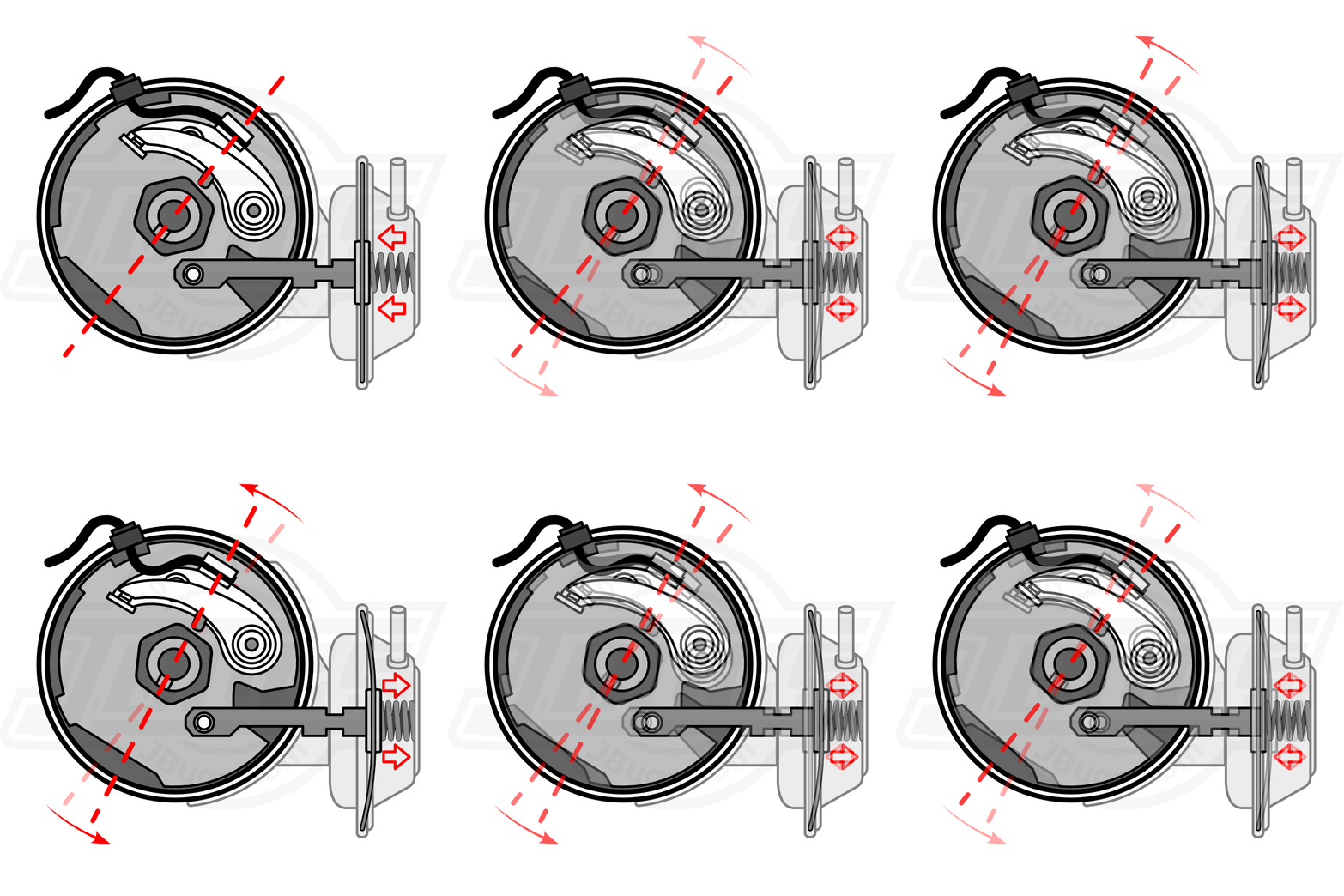
Vacuum Advance

Distributor Vacuum Advance
Based on engine load
With vacuum advance, the vacuum (created at the carburetor or manifold) moves a diaphram which advances a base plate inside the distributor.


The main benefit of the vacuum is that it starts advancing the timing before the centrifugal advance has a chance to spin up. This greatly helps acceleration off of idle. Your engine doesn’t want the same timing idling at a stoplight as it does when crusing at 60mph. An SVDA adapts to all of that automatically.

Compared to a mechanical-only distributor (like a 009), an SVDA:
  • Improved Fuel Economy: Vacuum advance helps optimize efficiency, particularly at cruising speeds.
  • Better Street Drivability: It provides increased responsiveness when accelerating away from a stoplight.
  • Cooler Engine Operation: By ensuring a complete burn before the exhaust valve opens, it reduces cylinder head temps, preventing overheating and potential damage, such as warped valves.
  • Enhanced Idle: When connected to direct manifold vacuum, it can provide a smoother, more efficient idle.
  • Best for Street Vehicles: While drag racing requires wide-open throttle (no vacuum advance), street vehicles operate mostly under light load, making vacuum advance essential for performance.
Vacuum advance works in conjunction with centrifugal (mechanical) advance. When you "step on it," the vacuum drops, and the distributor relies on the mechanical advance for power, preventing engine knock. Together, they let the ignition timing react to how fast the engine is spinning and how hard it’s working. Advance your timing and your standards with an SVDA Distributor.
If SVDA's are so great, why doesn't every VW run one?

Well, a lot of them did! Starting in the early 1960s, Volkswagens were equipped with Single Vacuum Advance (SVA) distributors, commonly found on 1200–1500 cc engines. The 1600cc engines of late 1960s – early 1970s (pre-emissions era) saw an upgrade to the Single Vacuum, Dual Advance (SVDA) distributor, which offered improved performance for street-driven vehicles. Early – mid 1970s (U.S.-market cars with stricter emissions regulations) ran Dual Vacuum Dual Advance (DVDA) distributors.

SVDA distributors provide a smoother, more economical driving experience by using engine vacuum to deliver initial advance off idle, while engine RPM controls advance at higher speeds.

At some point, the centrifugal-advance-only “009” (0-231-178-009) distributor—well suited for performance and racing applications—became the preferred choice for many vintage VW owners. As a result, thousands of stock vacuum-advance distributors were replaced in favor of the perceived “performance” upgrade. Don’t get us wrong: in the right application, the infamous 009 is a solid and effective option. However, it was never factory-installed on stock street VWs.

For those of us enjoying our VWs on city streets, weekend cruises, daily commutes, or even chugging along a dirt trail, a stock-style SVDA distributor delivers the best overall drivability and real-world performance.