Introduction:

Air-cooled Volkswagens from the 1950s through 1979 use a simple, cable-operated clutch system. While the design is durable and easy to service, wear and improper adjustment can lead to slipping, chatter, noise, or shifting problems.

This guide covers:
• Signs of a slipping clutch
• Clutch cable adjustment basics
• Symptoms of a failing throw-out bearing
• When it’s time for a full clutch replacement

This applies to:
• Type 1 (Beetle & Super Beetle)
• Type 2 (Bus)
• Karmann Ghia
• Type 3 models
(All manual transmission models)

How the VW Clutch System Works

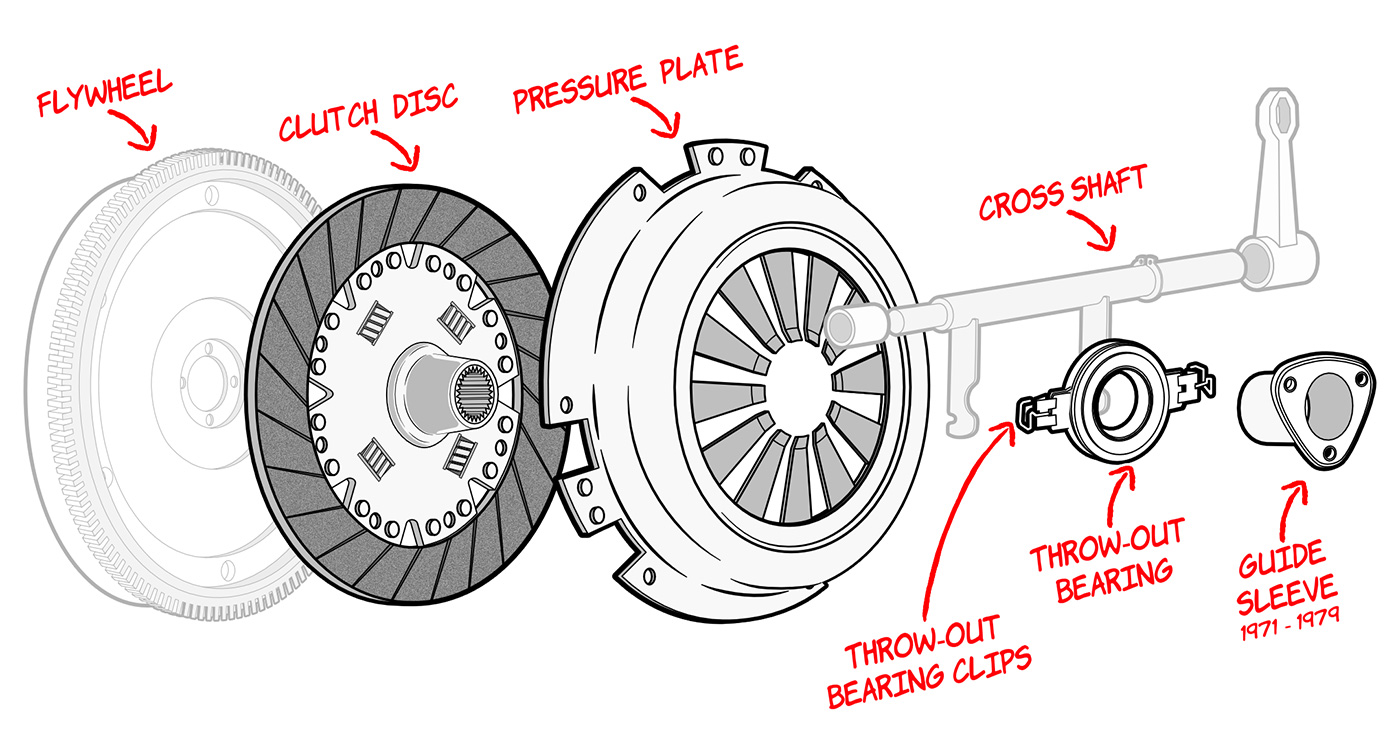
Air-cooled VWs use a mechanical clutch cable system. When you press the clutch pedal:
1) The clutch cable pulls the clutch release arm.
2) The throw-out bearing presses against the pressure plate.
3) The pressure plate releases clamping force on the clutch disc.
4) The engine disconnects from the transmission so you can shift.
Because it’s fully mechanical (no hydraulics), correct cable adjustment is critical.

Signs of a Slipping Clutch

A slipping clutch occurs when the clutch disc can no longer fully grip the flywheel and pressure plate. Let's examine the most common symptoms.

Symptom 1: Engine Revs Increase Without Acceleration.
You press the gas, the RPM climbs, but the car barely accelerates. This is the most obvious sign.
A good test:
• Drive in 3rd or 4th gear at low speed.
• Press the throttle firmly.
• If RPM jumps quickly without matching vehicle speed, the clutch is slipping.

Symptom 2. Burning Smell After Acceleration
A worn clutch disc can produce a hot, burnt smell after hard acceleration or hill climbs.

Symptom 3. Difficulty Climbing Hills
If your VW struggles more than usual on hills — especially under load — clutch slippage may be the cause.

Symptom 4. Engagement Point at the Very Top of Pedal Travel
If the clutch only grabs at the very top of pedal release, it may indicate:
• Worn clutch disc
• Over-tightened cable
• Improper free play
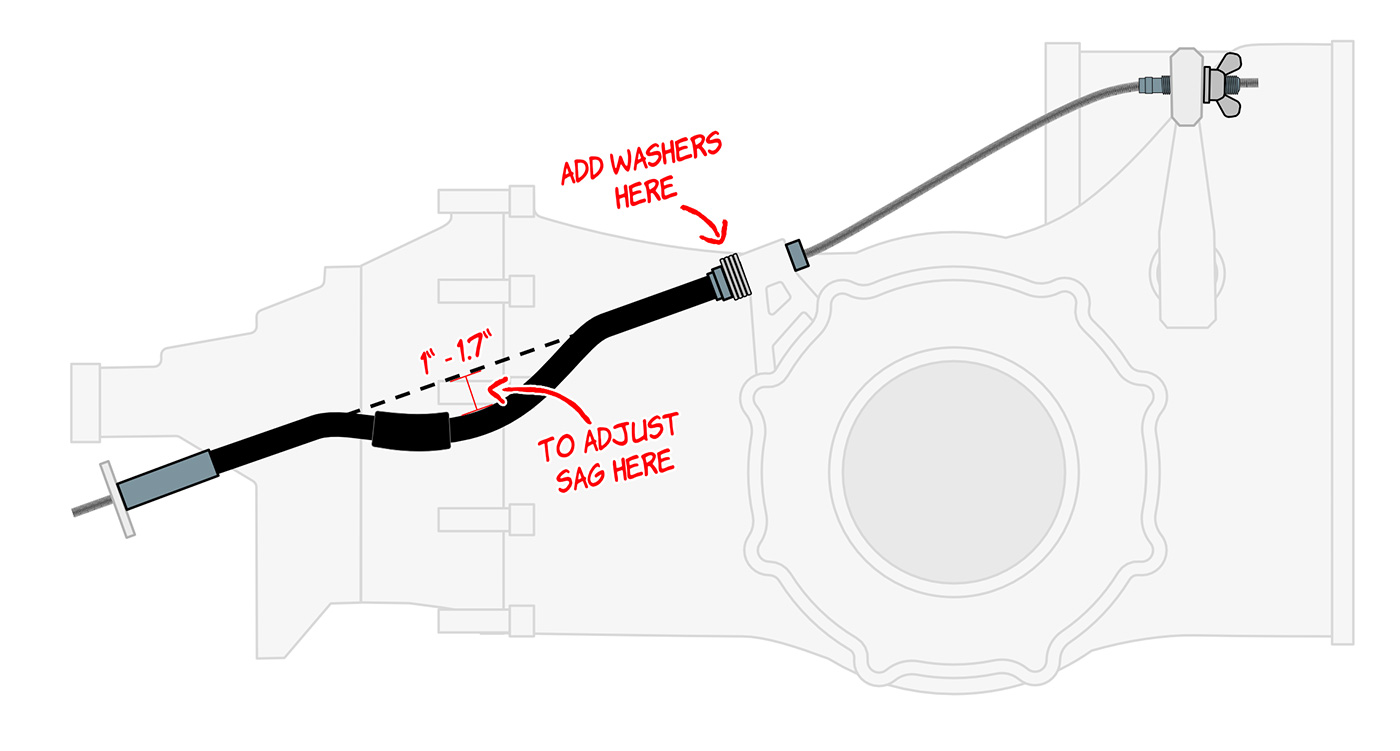
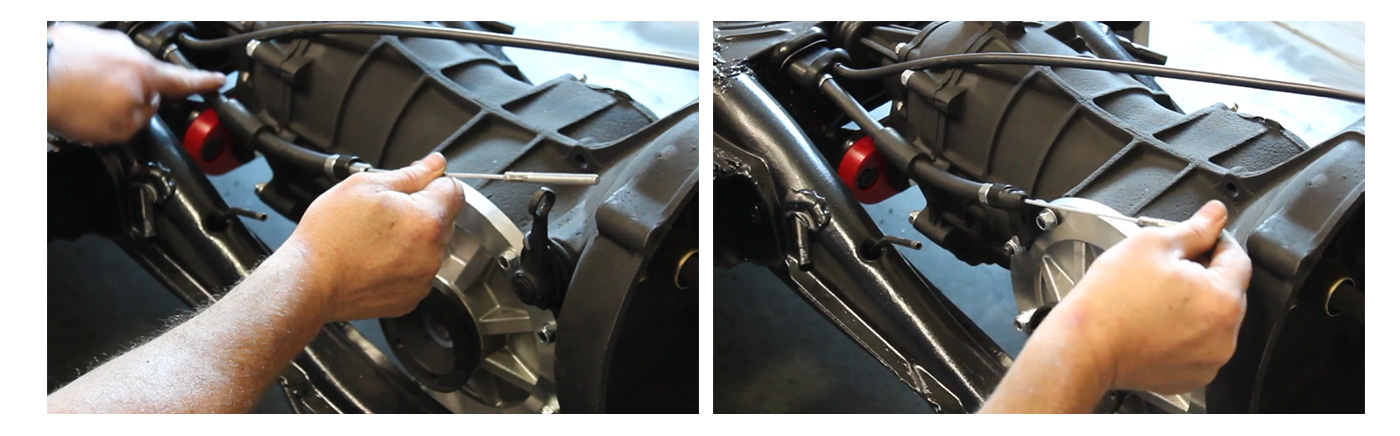
Setting Clutch Cable Tube Sag

Allow for approximately 1 inch to 1.7 inches (25.4 – 43.2mm) of sag in the clutch cable tube (Bowden Tube). If the tube is too tight, add washers to slacken the tube.
VW adjusting clutch tube slack

Clutch Cable Adjustment

Air-cooled VWs require proper clutch pedal free play.

Correct Free Play:
Approximately 3/4 inch (15–20mm) at the top of the clutch pedal.

Too tight (no free play):
• Can cause clutch slipping
• Premature throw-out bearing wear
• Overheating of clutch disc

Too loose:
• Hard shifting
• Grinding into gear
• Can't shift into gear
• Incomplete clutch disengagement

How to Adjust:
1) Locate the wing nut on the clutch cable at the transmission.
2) Turn the wing nut:
    a)Tighten (clockwise) → reduces free play
    b)Loosen → increases free play
3)Recheck pedal free play at the pedal.

Always verify the Bowden tube has proper sag. Insufficient sag can cause clutch chatter.

Signs of a Failing Throw-Out Bearing

The throw-out bearing (release bearing) presses against the pressure plate fingers every time you depress the clutch pedal. Let's examine the most common symptoms.

Symptom 1: Noise When Pressing the Clutch Pedal.
A whining, growling, or grinding noise that:
• Appears when the pedal is pressed.
• Disappears when released.
This is classic throw-out bearing failure.

Symptom 2. Vibration Felt in the Pedal
If you feel vibration or roughness through the pedal, the bearing may be worn..

Symptom 3. Noise That Changes With Pedal Pressure
If the sound gets louder as you press further, suspect the bearing.
If noise is present when the pedal is released, it may be a transmission input shaft bearing instead.

Early vs Late Throw-Out Bearing Styles

Air-cooled VW transmissions used two main styles. Using mismatched components can cause immediate failure.
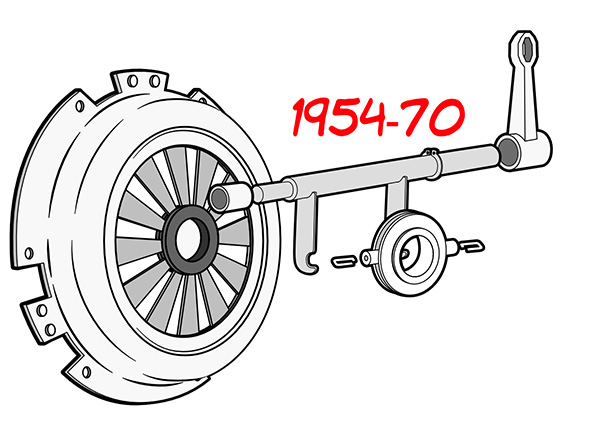
Early Style (Pre-1971 Beetle / Pre-Guide Tube)
• No guide sleeve on transmission
• Pressure plate requires center ring
• Bearing clips to cross shaft arms
VW Early Throw Out Bearing Diagram
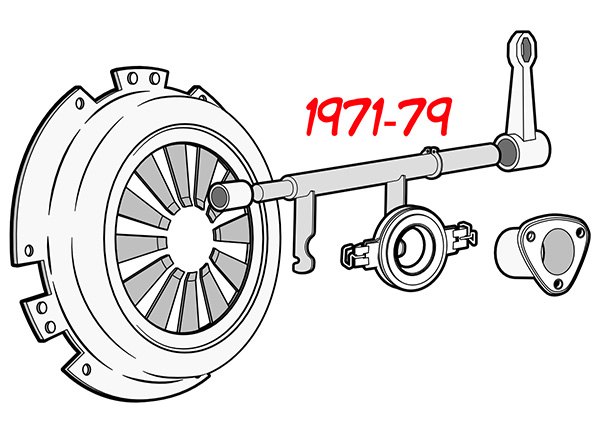
Late Style (1971-on Beetle & most later models)
• Uses guide sleeve around input shaft
• No center ring on pressure plate
• Self-centering throw-out bearing
VW Early Throw Out Bearing Diagram

Other Clutch Problems to Watch For:

Clutch Chatter (Shudder on Takeoff)
Possible causes:
• Oil contamination on disc
• Warped flywheel
• Bad engine/trans mounts
• Improper Bowden tube sag

Hard Clutch Pedal
Possible causes:
• Frayed clutch cable
• Failing clutch cable tube inside tunnel
• Heavy-duty pressure plate

Clutch Won’t Disengage
Possible causes:
• Cable broken
• Cable stretched
• Clutch disc fused to flywheel (long storage)

When Is It Time for Full Clutch Replacement?

Replace the clutch assembly if:
• Disc is worn to rivets
• Pressure plate fingers are uneven
• Flywheel is heat-spotted or cracked
• Throw-out bearing is noisy
• Engine is already out of vehicle (preventative maintenance)

Because engine removal is required, it’s smart to replace:
• Clutch disc
• Pressure plate
• Throw-out bearing
• Clutch cable (if old)
• Rear main seal
• Flywheel seal

Quick Troubleshooting Chart

Symptom
Likely Cause
RPM rises, no acceleration
Slipping clutch disc
Grinding into gear
Cable too loose
Noise when pressing pedal
Throw-out bearing
Pedal very high engagement
Worn disc or misadjusted cable
Shudder when starting
Oil contamination or Bowden tube issue

Final Thoughts:

The clutch system on 1950–1979 air-cooled Volkswagens is simple, reliable, and easy to maintain — but only when properly adjusted. Regularly checking clutch free play and listening for early warning signs can prevent:

• Premature clutch wear
• Transmission damage
• Unexpected breakdowns

If you notice slipping, noise, or shifting issues, address them early before more expensive damage occurs.

Quick Reference Summary

Model
Years
Model
Years
Beetle/Ghia/Type 3
1954(50)–1966
180mm Clutch Disc
Early T.O. Bearing
Beetle/Ghia/Type 3
1967–1970
200mm Clutch Disc
Early T.O. Bearing
Beetle/Ghia/Type 3/Thing
1971–1979
200mm Clutch Disc
Late T.O. Bearing
Bus
1955(50)–1970
180mm / 200mm Clutch Disc
Early T.O. Bearing
Bus
1971
200mm Clutch Disc
Late T.O. Bearing
Bus
1972–1979
210–228mm Clutch Disc
Late T.O. Bearing